
A content management system (CMS) is a software application that simplifies the creation, management, and publishing of digital content. Rather than manually writing HTML, CSS, and JavaScript to build web pages, a CMS allows user to add, organize, design, and update content through a user-friendly interface. By allowing users to skip implementing website fundamentals from scratch, a CMS both lowers technical barriers and streamlines the process of creating digital content.
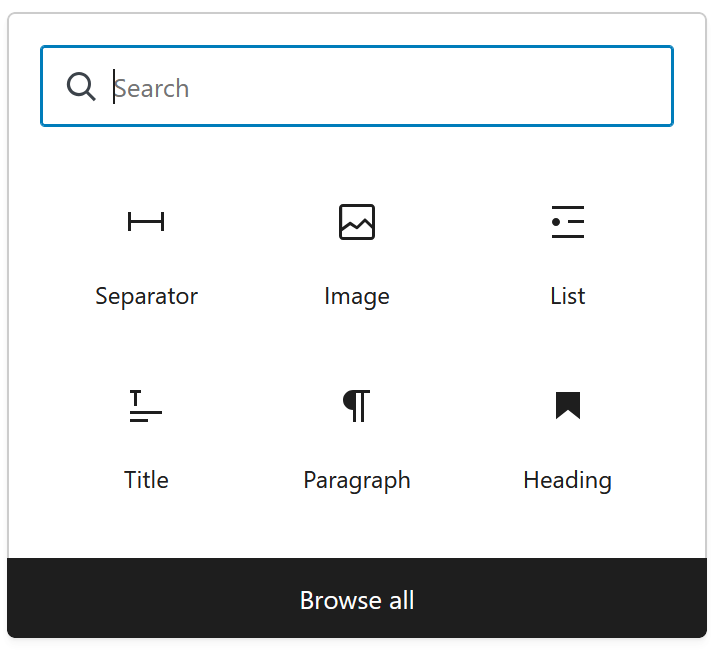
For example, this website uses the WordPress CMS. The overall visual design was achieved simply by installing the Pulitzer WordPress theme (no custom CSS required). Creating post content is likewise code-free thanks to WordPress’ block-based editor. To add a paragraph of text, image, horizontal separator, or other element, you can just click “Add block,” select the appropriate type, and continue from there. The result is that writing a web article feels much more like working in Microsoft Word than writing HTML.
Citations
- Wikipedia Contributors. “Content Management System.” Wikipedia, Wikimedia Foundation, 23 Oct. 2019, en.wikipedia.org/wiki/Content_management_system. Accessed 25 Jan. 2026.

Leave a Reply